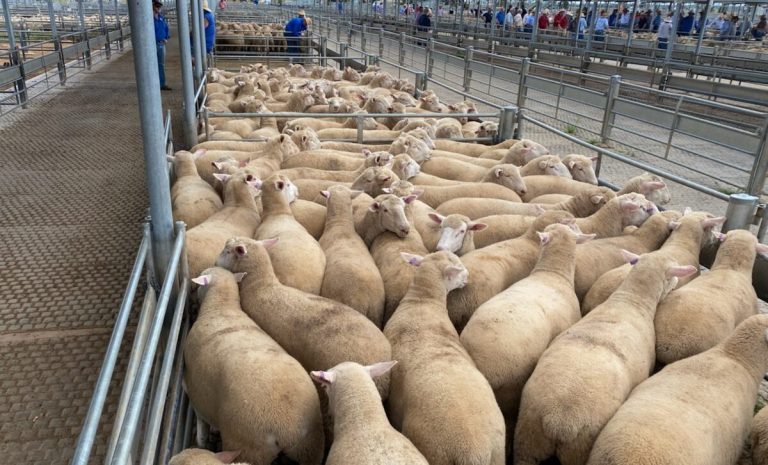
Australia is grappling with a surplus of mutton that has caused prices to plummet, leading some farmers to make tough decisions about their livestock. Over the past year, mutton prices in the country have dropped by a staggering 70% to $1.23 per kg (56 cents a pound), according to data from Meat and Livestock Australia (MLA). The surge in sheep numbers is attributed to several consecutive years of favorable weather conditions, particularly abundant rainfall in key sheep regions such as New South Wales and Victoria. This weather has facilitated optimal grass growth, creating a conducive environment for feeding and breeding livestock.
Tim Jackson, a global supply analyst at MLA, highlighted the impact of consecutive good seasons, stating, “Australia has had several very good seasons over the past few years, which means that the sheep flock has reached 78.75 million head — the largest since 2007.”
The abundance of rainfall and prolonged market buoyancy encouraged producers to retain more sheep on-farm rather than sending them to slaughterhouses and markets. This led to a significant increase in the overall sheep flock, reaching levels not seen in decades.
However, the surplus has resulted in a drastic decline in mutton prices, causing financial challenges for farmers. Andrew Spencer, Chairman of Sheep Producers Australia, explained that farmers have experienced a substantial fall in profitability, and many sheep may not find a market, potentially leading to the culling or destruction of animals.
The oversupply issue is expected to persist, with Australia’s sheep flock projected to expand by 23% from the 100-year low recorded in 2020. This oversupply has reversed the positive trend in mutton prices that farmers enjoyed just three years ago.
Compounding the problem, adverse weather conditions, including the driest September on record, have hampered feed supply. The Australian Bureau of Meteorology warns of continued dry conditions, reducing the availability of feed for livestock.
Farmers are now attempting to reduce their flock, including sending livestock to slaughterhouses, but processing facilities are struggling to cope. Labor skill shortages and a backlog of unprocessed stock from the previous year contribute to the bottleneck in slaughterhouses.
The oversupply has global implications, as Australia is the world’s leading producer and exporter of sheep meat. The surplus has exerted downward pressure on global wholesale prices, although retail prices have not yet seen a proportional decrease.
Despite the challenges, major Australian supermarket chain Woolworths Group has announced a 20% cut in the prices of lamb products. While the excess stock is gradually moving, consumers are expected to experience continued dips in mutton prices, both domestically and internationally.

You can also read: Road Rage Arrest: Motorist Fires BB Gun, Poses as FBI with Fake Badge
In response to the situation, some farmers are contemplating measures such as not mating ewes to reduce costs, potentially leading to a shift from oversupply to undersupply in the sheep market. A recent survey by the National Farmers Federation revealed that over 60% of Australian farmers do not feel more positive about the future of farming compared to the previous year.