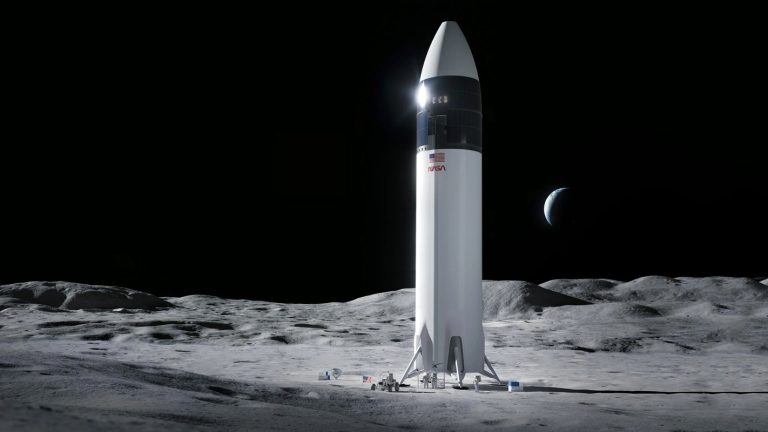
NASA is facing another delay in its quest to return astronauts to the moon, with the announcement on Tuesday that the next Artemis mission is now scheduled for launch in September 2025, instead of the initially planned date later this year. The subsequent mission, involving the actual landing of astronauts near the moon’s south pole, has been pushed to September 2026. This setback is attributed to the need for additional time to test new technologies on the Orion spacecraft for crewed moon missions.
NASA Administrator Bill Nelson emphasized the agency’s commitment to the safety of astronauts, stating, “We are returning to the moon in a way we never have before, and the safety of our astronauts is NASA’s top priority as we prepare for future Artemis missions.” The extension also provides an opportunity to address issues that arose during the first uncrewed Artemis test flight in late 2022, including a battery problem and challenges with components related to the Orion capsule’s air ventilation and temperature control systems.
Amit Kshatriya, the deputy associate administrator of exploration systems development at NASA headquarters, highlighted the importance of precision in Artemis development, stating, “Artemis is a long-term exploration campaign to conduct science at the moon with astronauts and prepare for future human missions to Mars. That means we must get it right as we develop and fly our foundational systems so that we can safely carry out these missions.”
The Artemis program has faced persistent challenges, including years of delays and budget overruns. With over $42 billion invested over a decade in the development of the Space Launch System mega-rocket and Orion spacecraft, NASA has been working towards its goal of sending astronauts back to the moon.
Last year, a report from NASA’s inspector general underscored the difficulties associated with the program’s high cost, estimating each Artemis launch to be around $4.2 billion. The report raised concerns about the sustainability of lunar missions alongside NASA’s other exploration objectives.

Named after the Greek goddess Artemis, the program envisions regular missions to establish a lunar base camp before progressing to Mars. The commercial space industry, including companies like SpaceX and Blue Origin, is expected to play a vital role in supporting NASA’s Artemis program. Private companies may receive contracts for transporting scientific experiments and equipment to the lunar surface.
Top Tips to Turn your Side Hustle into a Success
The global interest in lunar exploration extends beyond NASA and the U.S., with India’s space agency achieving a robotic spacecraft landing on the moon last year. Additionally, China, having landed a rover on the far side of the moon in 2019, is anticipated to intensify its lunar exploration initiatives in the coming years.