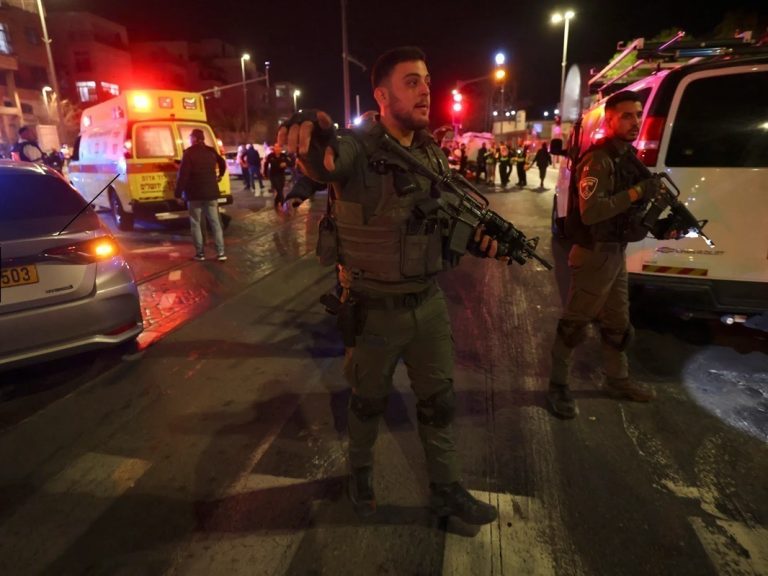
Israel and Hamas reached an agreement on Thursday to prolong their cease-fire by an additional day, narrowly avoiding its expiration. The stability of the truce in Gaza seemed precarious as the majority of women and children held by militants had already been released in exchanges for Palestinian prisoners. On the same morning as the extension announcement, gunmen launched a rush hour ambush on people waiting for buses at a key junction from Tel Aviv to Jerusalem, resulting in at least three fatalities and multiple injuries, according to police. The assailants were subsequently killed. The identity of the attackers and the potential impact on the Gaza truce remained unclear.
International pressure has intensified for the cease-fire to persist following nearly eight weeks of Israeli military actions in Gaza, causing thousands of Palestinian casualties, displacing a significant portion of the population, and creating a humanitarian crisis.
U.S. Secretary of State Antony Blinken, currently on his third visit to the region since the conflict’s onset, expressed condolences for the victims of the Jerusalem attack. He emphasized the importance of the ongoing process and hoped for its continuation.
Qatar, a key mediator with Hamas, confirmed the truce extension under previous terms, involving the daily release of 10 Israeli hostages by Hamas in exchange for Israel releasing 30 Palestinian prisoners.
The extension followed a last-minute hurdle, with Hamas initially claiming Israel rejected a proposed list, leading to a revised list being submitted and accepted. Talks are intensifying as Hamas has already released most women and children captured during the October 7 attack on Israel, triggering the conflict. Anticipated demands for the release of men and soldiers are expected to escalate.
Israel pledges to maintain the truce as long as Hamas continues releasing captives. However, if this process halts, Israel plans to resume its offensive to eradicate the group. With Israeli forces controlling much of northern Gaza, a southern ground invasion, where the majority of the population resides, could result in escalating Palestinian casualties and destruction.
The Biden administration has advised Israel to exercise greater precision in the event of a southern offensive. While the plight of captives and shock from the October 7 attack have garnered support for the war in Israel, there is pressure on Prime Minister Netanyahu to bring hostages home, making it challenging to resume the offensive if more releases are imminent.
The initial truce, focusing on the release of women and children, has been extended once and relies on subsequent negotiations for the release of around 126 captive men, including soldiers. The potential demands for comparable releases of Palestinian men or prominent detainees may present challenges.

As of now, negotiations for the extension regarding civilian males and soldiers remain preliminary. During the current truce, 73 Israelis, including dual nationals, have been released, along with 24 other hostages. The toll of the conflict includes over 1,200 killed in the October 7 attack, with Gaza reporting over 13,300 Palestinian casualties.
You can also read: Streaker Arrested at Disneyland’s ‘It’s a Small World’
In Gaza, the truce’s relative calm is overshadowed by the search for aid and the devastation’s extent. The breakdown of services in the north has hindered accurate casualty updates, with many feared dead under the rubble. The truce has allowed limited aid from Egypt, but overwhelmed U.N.-run shelters house over a million displaced people, facing challenges exacerbated by cold, rainy weather.