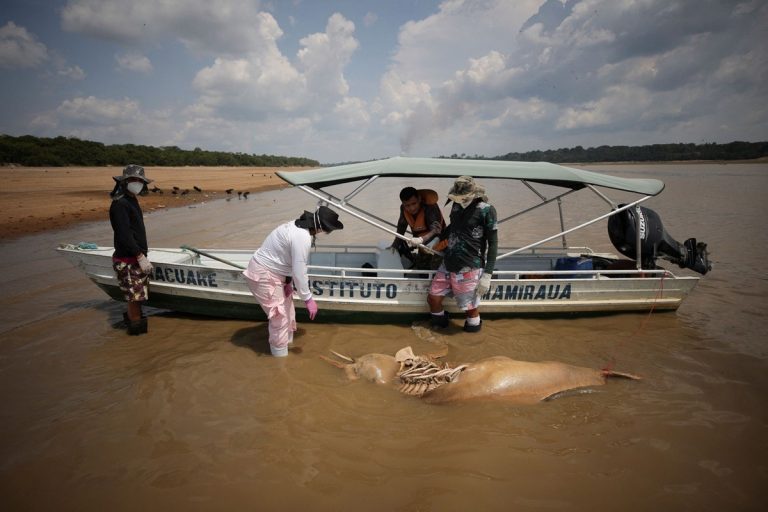
More than 120 river dolphins have tragically perished in an Amazon River in Brazil, with suspected links to unprecedented heat and drought. The Mamiraua Institute, which operates under Brazil’s Ministry of Science, Technology, and Innovation, has reported that temperatures in the affected Tefe Lake region soared to a scorching 102 degrees Fahrenheit. This extreme weather has not only affected the dolphins but has also led to the death of numerous fish.
The Amazon river dolphins, renowned for their distinctive pink coloration, are unique to South American river systems and represent one of the few remaining freshwater dolphin species worldwide. Shockingly, the recent fatalities could account for a significant 10% of the estimated pink dolphin population in Lake Tefe, posing a grave threat to their survival in the area.
Both the pink dolphin, locally referred to as “Boto,” and the grey river dolphin, known as “Tucuxi,” hold threatened species status according to the International Union for Conservation of Nature. Alarming reports indicate that when Lake Tefe’s water temperature reached a sweltering 102 degrees, well above the norm, approximately 70 dolphin carcasses were discovered.

The severe drought has also taken a toll on local communities along the riverbanks, resulting in restricted access to vital resources such as water and hindering transportation. Tefe’s mayor has highlighted the challenges in delivering essential supplies to isolated areas due to the drying up of rivers.
You can also read: Two U.S. Army Soldiers Killed in Tragic Accident in Alaska
Environmentalists argue that these tragic deaths directly stem from the impacts of climate change.
Follow Us On Social Media:
Instagram
Facebook
TikTok
Twitter